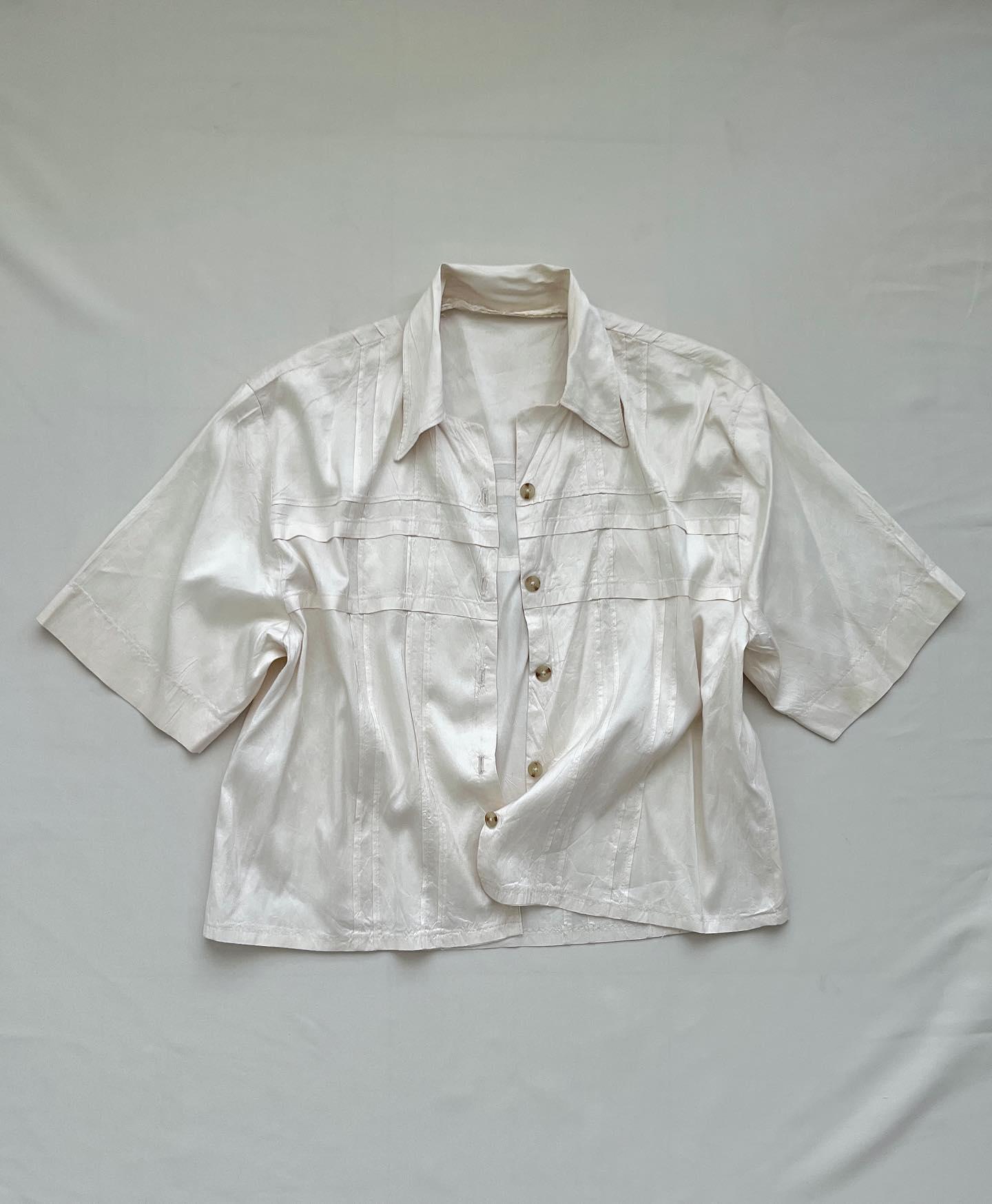
Laurel Schwulst: I have a favorite, uniquely patterned blouse from 2015 by a French workwear brand. It’s very special to me because it’s my favorite color, and it has a hidden pocket. The shirt is old now, though. Unfortunately, it has some staining and needs new buttons and so on. I’ve always imagined someday I would re-create it, since to me it’s my ideal shirt. Maybe it would be my “Steve Jobs turtleneck,” but I would want it in a handful of colors.
I wondered to myself, what’s the right way to go about re-creating it? I could hire a tailor, but as my friend Tracy advised, the tailor will never love the shirt as much as me. I would want to treat this project with care since it’s a long-term-vision type of project, a “personal uniform” of sorts. So even though I could hire a tailor to create a copy, I realized I needed to go a different route.
A half year passed while I was ambiently on the lookout for a collaborator for my shirt project…
Wietske Nutma: Laurel visited Rotterdam this fall. When we met a few months prior for “Naive Yearly” (an annual gathering for the independent, quiet, poetic web), she told me about this much loved shirt she bought 8 years ago which is now quite worn. And how she was dreaming of creating a pattern for it or replicating its essence somehow.
When she came to R'dam she brought the shirt with her to show me. We talked a great deal about clothing and identity and how clothes support the various roles we play in life, the people we aspire to be, or the character traits we'd like to have when we wear them. Similar to how I have always opted wearing the same boxy buttoned-up shirt whenever I feel nervous about the day ahead. That shirt has become a uniform of sorts, providing a sense of reassurance and making me feel more okay.
It was really nice to reflect together on the use of her garment, the energy it carries, and what it would mean to recreate it. She has loved and worn it for years now and along the way the shirt acquired some stains that can't be removed, a few holes here and there and some of the buttons have faded or went missing.
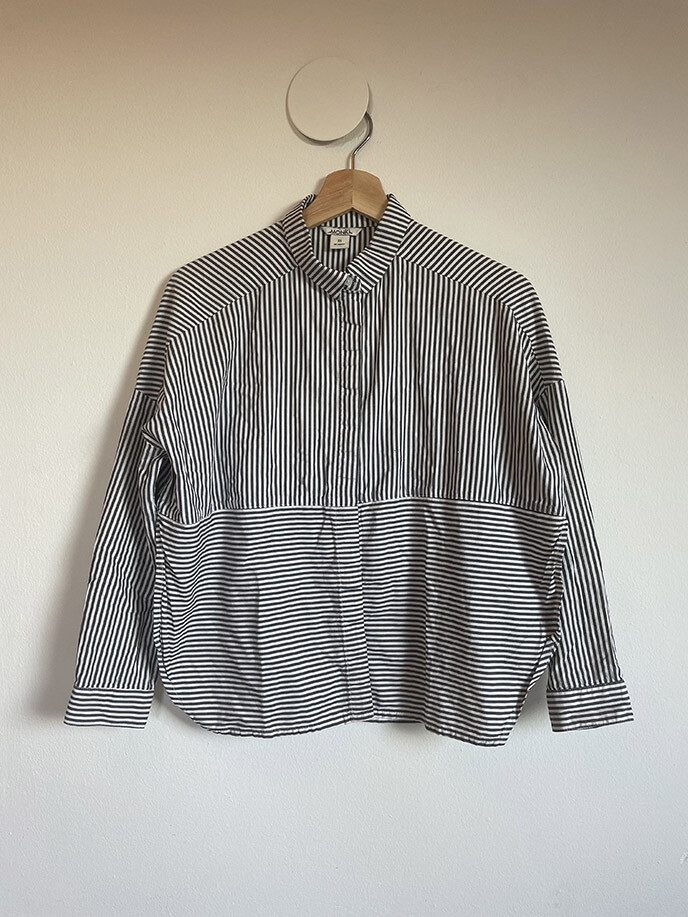
Laurel: In my favorite shirt, I could be doing anything. It gave me a certain confidence. I collected photos of myself over the years wearing the shirt, because through them, I wanted to share with Wietske that special feeling. In these photos, I'm with my friends, I'm with my family, I’m teaching a class, I'm on vacation, I'm on a work business trip, I'm sailing, or I’m shaving off all my hair. I could be doing anything.
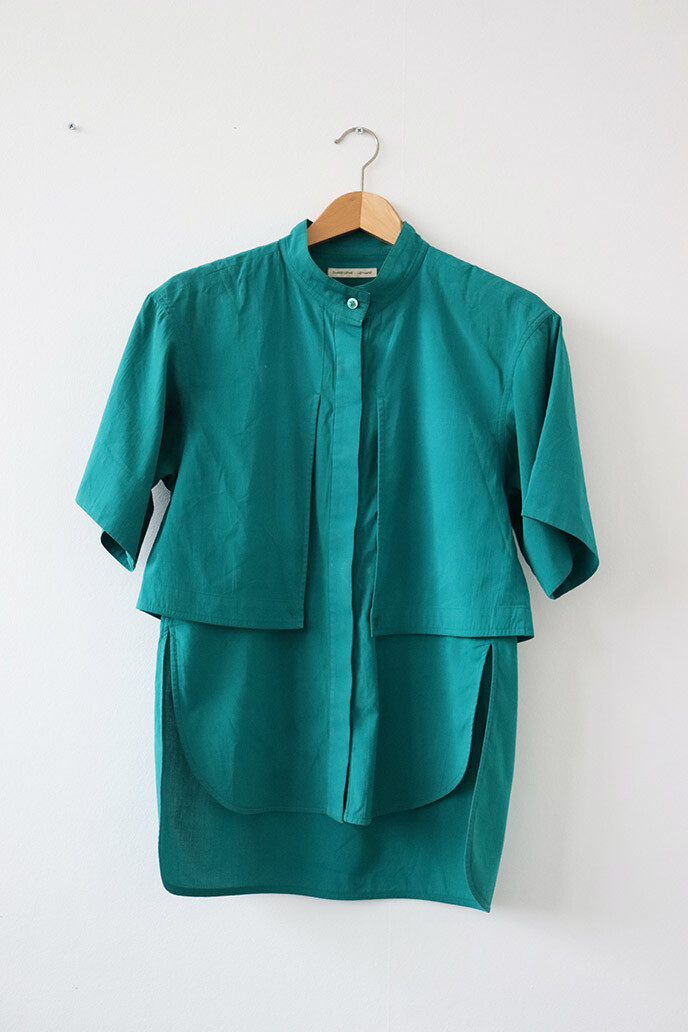
The original shirt was an elegant deep bluegreen (but maybe more green than blue) cotton poplin buttoned blouse. It had an extra flap or “cape” that made it feel slightly otherworldly, or maybe capable of some type of flight. It also reminded me of a fishing jacket, maybe because of the color. Because of the shirt’s elegance with its buttons and mockneck, paired with this practicality of fishing or flight, it felt like a perfect balance between casual and formal. It was timeless, and wearing it felt effortless and elegant.
Wietske: It's been almost a year now since Laurel asked me if I could recreate her shirt, and I know she will be in Europe this year again to visit the second annual Naive Yearly. I thought that I could use that as an opportunity to get her a first draft of the pattern. Unfortunately, I wasn’t able to come but I knew our friend Elliot was and he could take it to her.
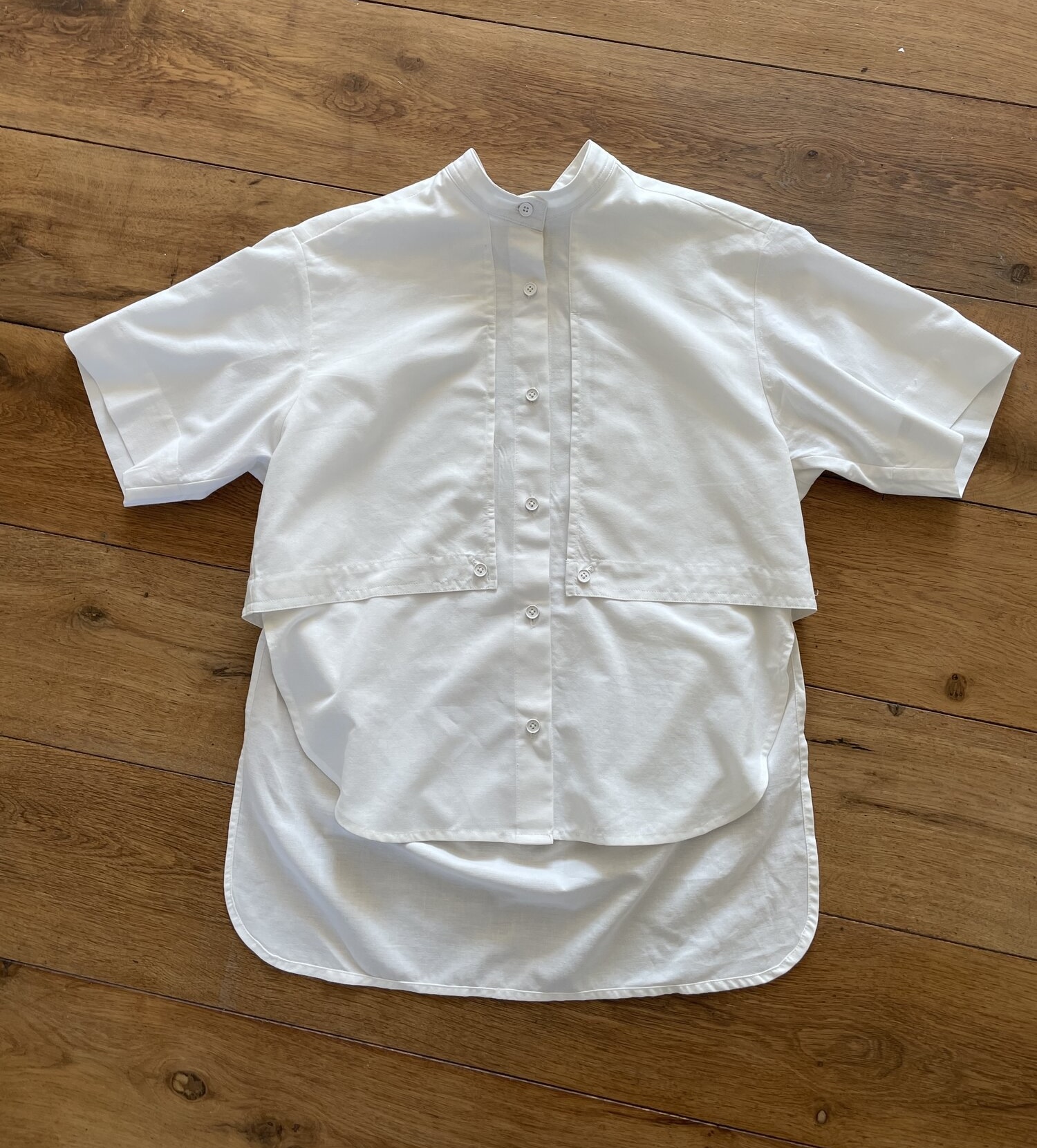
I made this first “copy” from and old bedsheet. The fabric was still really good, it had softened with wear and I did not want to waste any of it. I believe I’ve come really close to an exact copy of the shirt Laurel gave me. The only thing I changed was the button placket on the front. I really liked the buttons I found and I thought it was a shame to hide them. Laurel told me it feels more honest to show them too.
Laurel: For the past couple months, I’ve been wearing a beautiful white blouse that Wietske made custom for me. When I wear it, I feel this perfect blend of formal and casual, like I could enter any situation. I love to wear it while teaching or going to a business meeting, but also to lunch with a friend. When someone compliments it, I love sharing how my friend Wietske made the shirt from the good parts of an old bedsheet she had, and how this shirt is actually a copy of a favorite old shirt of mine.
It’s strange, but somehow I might like the new shirt more than the old. But maybe it’s not fair to compare, since the shirts live in such different eras of my life — 8 years apart. The new shirt is not only a copy of my old shirt, but embedded with an evolving story of Wietske’s inspired recreation from her old bedsheet. Plus, I know from our conversations she thoughtfully considered how to recreate it — should she take apart the old shirt and trace its pattern or recreate it using other methods? She’s been sharing her process in a shared Are.na channel we have together…
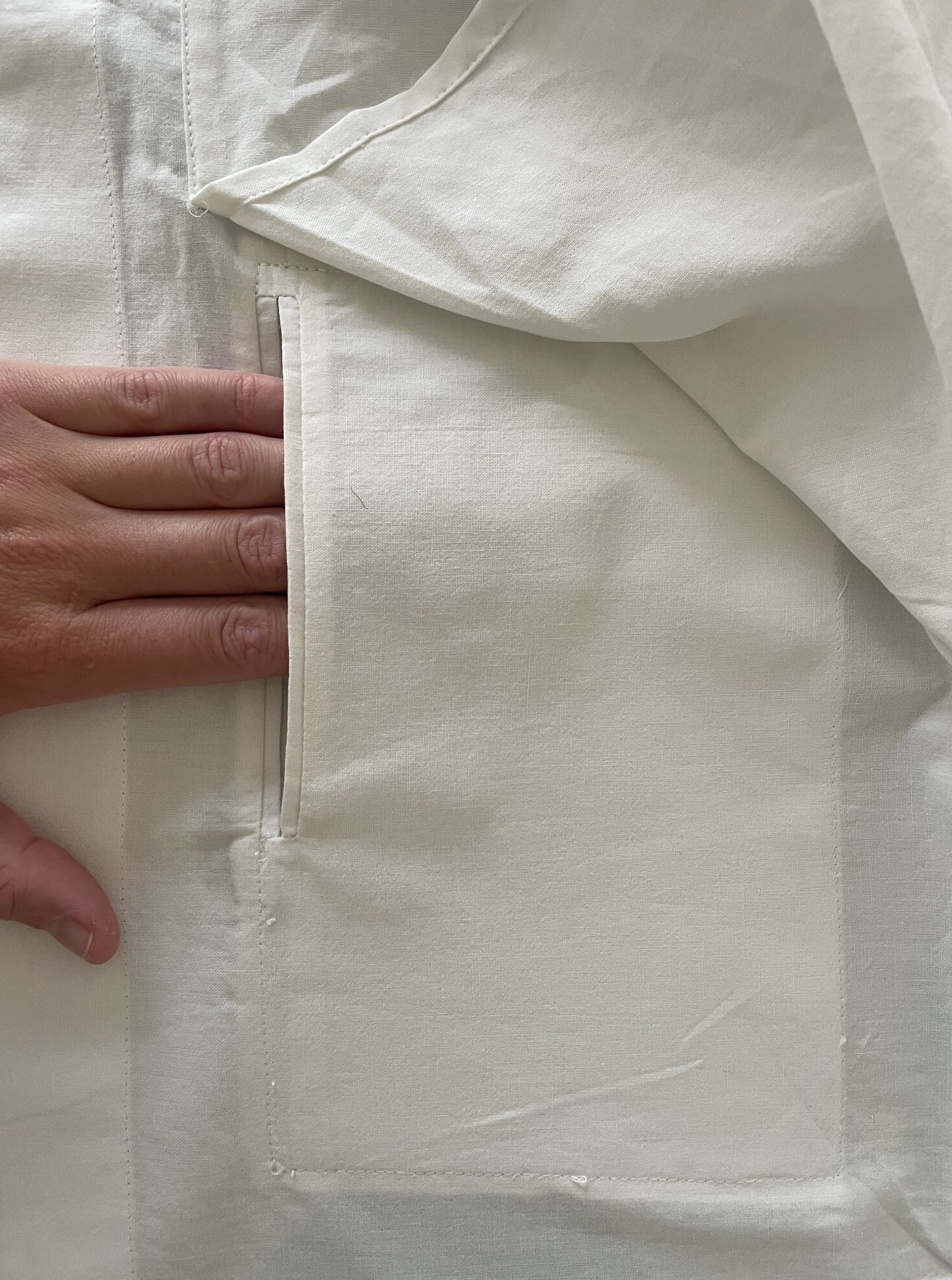
Wietske: One of the shirt's beautiful details is a jet pocket that is neatly tucked away underneath the front right side of the cape. The cape hides whatever you put in this pocket. Laurel told me that she loves this shirt so much because she can hide her phone inside it.
A jet pocket is made by making a slit in the outer fabric of the shirt with the pocket itself hanging on the inside of the shirt. This is what makes the pocket almost entirely invisible. It has two bound edges (the jets), strips of fabric that run above and below the opening.
Laurel: Last year I was having a conversation with my accountant. I asked him if I could deduct dry cleaning in my expenses, since some of my outfits I wear specifically to teach. My accountant told me that I could if whatever I'm wearing is very clearly a "uniform" — either it's a painting mock, something special I wear while performing, or something very clearly with my logo on it. Whatever it is, the uniform needs to be clearly distinguishable from everyday wear…
Wietske: In our latest call together we spoke about how to go on from here. How many shirts shall we make, and what fabrics shall we use? Laurel was telling me that she’d like one for the summer made from linen, one that is light and airy for during the sticky days. It made me think of the seasons and how they could play a role in considering the shirt’s design. What would a winter version of this shirt look like, or an autumn or spring one? What different characteristics should they have? I find myself daydreaming about all the things we could change, like adding long sleeves and a collar for winter, making side slits for the summer, etc. It’s nice to think about different versions and how the shirt can be more than just a copy. If Laurel can wear it all year round, then it will have become a true uniform I think.
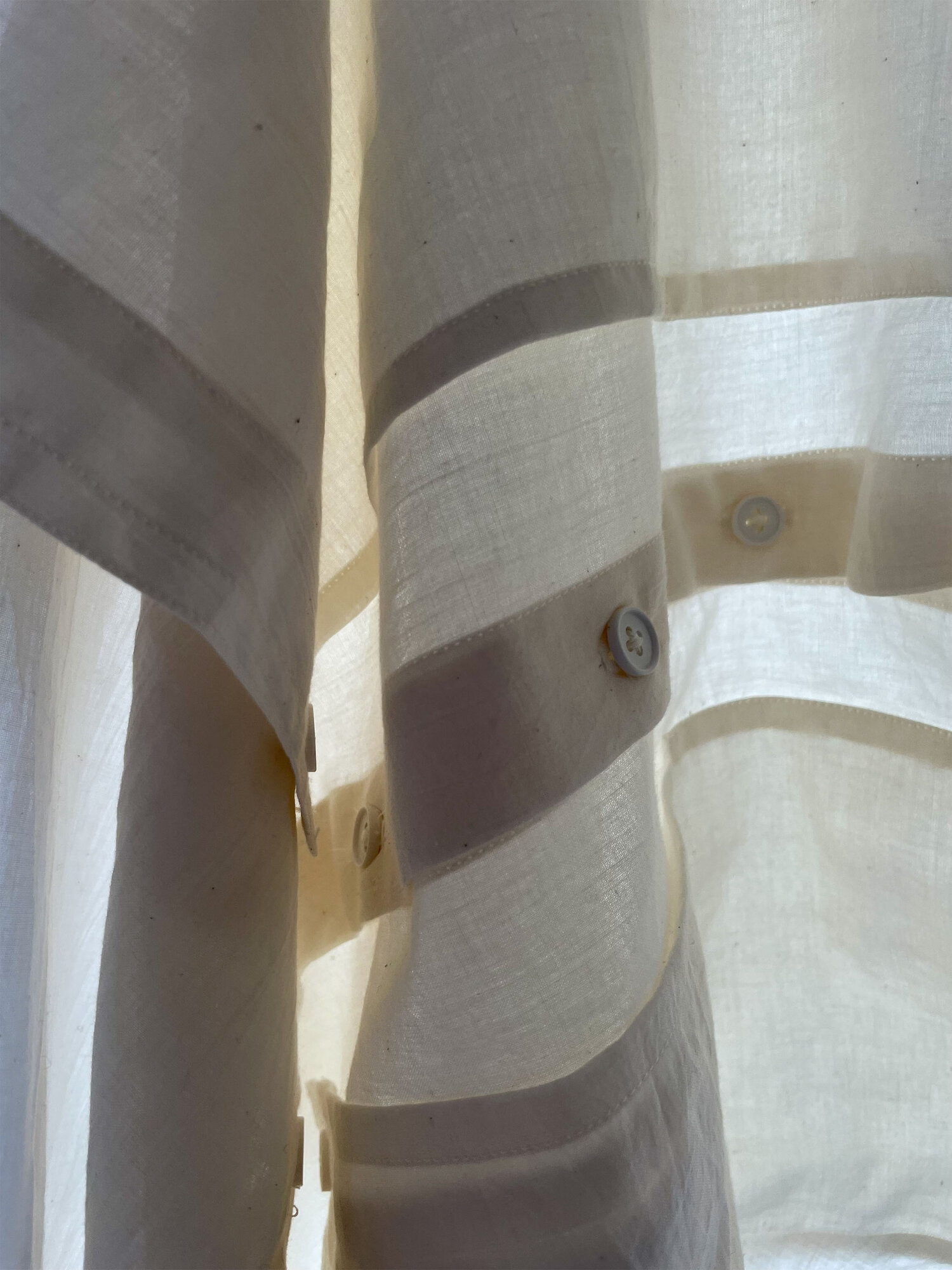
Laurel: When does a copy become something new? When does a beautiful shirt become a working uniform? While I don’t have the answers to these questions yet, I do know that commissioning my friend Wietske to create this shirt copy feels like some of the best money I’ve ever spent, and that the gradual process of this shirt’s becoming has been one of my favorite projects, and it’s still happening.
Wietske: I appreciate that this whole process centers and strengthens a relationship between maker and wearer which is usually so absent in the garments we buy. The making of this shirt is built around conversation, craft, and thoughtful ownership.